Hay Feed Analysis & Testing Australia
Hay Feed Analysis for Confident Feeding and Trading Decisions
Understand the nutritional value of your hay before you feed, buy or sell.
Integral Feed Solutions provides hay feed analysis for Australian livestock producers, hay growers, nutritionists and commodity traders. Whether you need a straightforward assessment for trading or detailed nutritional information for ration formulation, we can help you select an appropriate testing package.
Compare hay testing packages · Order your hay feed analysis
What is hay feed analysis?
Hay feed analysis assesses the nutritional composition of a hay sample. Depending on the testing package, results can include dry matter, crude protein, fibre and other information used to evaluate feed value.
A hay test helps answer practical questions:
- What nutritional information should I consider before buying this hay?
- How does this batch compare with another available feed?
- What information does my nutritionist need to include the hay in a ration?
- What results can I provide to prospective buyers?
- Is more detailed analysis needed for my intended use?
The usefulness of the report depends on choosing the right package and collecting a sample that represents the hay being assessed.
Why test your hay?
Understand more than appearance alone
Colour, smell and texture can provide useful observations, but they do not give you a complete nutritional profile.
Hay feed analysis adds measurable information to your assessment. It helps you move beyond assumptions about feed value and make decisions using results from the sample submitted.
Compare hay purchases on nutritional value
A lower price per bale or tonne does not necessarily mean better nutritional value.
Moisture content and nutritional composition affect what you are buying. A hay analysis report provides information that can help you and your adviser compare feeds on a more meaningful basis, including dry matter, protein and energy where reported.
Consider those results alongside freight, storage, wastage and the needs of your livestock.
Give your nutritionist better information
Different livestock classes and production stages have different nutritional requirements. Hay suitable for one feeding situation may not be the best fit for another.
Testing provides information your nutritionist can use to assess how the hay fits with other ration ingredients and whether supplementation may be required.
Support hay marketing and sales
For growers and sellers, a feed analysis report provides nutritional information to share with buyers.
Clearly linking the report to the sampled batch helps buyers understand what was tested. It also supports more informed conversations about the hay’s intended use and value.
What does a hay feed test measure?
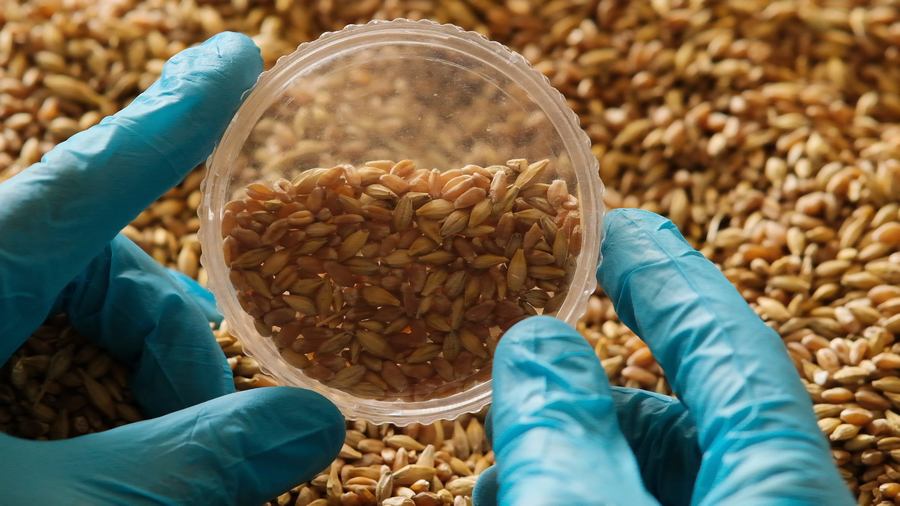
The measurements and reported values depend on the package selected. Not every test includes every parameter, so check the inclusions before ordering.
| Report term | What it tells you |
|---|---|
| Dry matter | The proportion of the sample remaining once water is excluded. This helps establish the basis for comparing nutritional concentrations. |
| Moisture | The water content of the sample. |
| Crude protein | A commonly used measure of protein content that contributes to nutritional assessment. |
| Neutral detergent fibre, or NDF | Information about the hay’s fibre fraction, used when evaluating feeds and diets. |
| Acid detergent fibre, or ADF | Another measure used to characterise the fibre fraction. |
| Digestibility | An assessment of how much material may be digested, according to the method used. |
| Energy values | Estimates that support nutritional comparison and ration development, where included. |
| Sugars and other carbohydrates | Additional information that may be relevant to detailed diet assessment, depending on the package. |
Understand the reporting basis
Check whether nutrient results are expressed on a dry matter or as-fed basis.
As-fed results include the effect of water in the sample. Dry matter results exclude water, allowing nutritional concentrations to be considered on a consistent basis.
Avoid comparing figures directly unless their units and reporting basis match. Your nutritionist can help interpret the results in the context of the full ration.
Choose the right hay analysis package
The best hay feed test is the one that provides the information needed for your decision.
Traders Test: for hay buying and selling
The Traders Test is an economical option for hay and grain trading assessments, focused on simple energy and protein-based comparisons.
It is a practical starting point when you need nutritional information to support a transaction rather than a detailed ration-formulation dataset.
Check the current package inclusions before ordering. If you may need more comprehensive results later, ask about upgrade availability and retained-sample conditions.
CNCPS 6.5+: for detailed nutritional assessment
The CNCPS 6.5+ package provides a more detailed NIR-based nutritional profile for farm feed assessment and complex diet formulation.
If a nutritionist will use your hay results, confirm whether this is the package they require before submitting the sample.
Complete NASEM: for nutritionist reporting requirements
Complete NASEM is another detailed NIR testing option intended to support ruminant nutritionists working on complex diets.
Ask your nutritionist which reporting format best suits their formulation requirements.
Representative sampling matters
Even a detailed laboratory report cannot correct an unrepresentative sample.
If the submitted material differs from the hay being bought, sold or fed, the results may provide a misleading picture of that batch.
To improve the usefulness of your test:
- Define which hay lot the sample represents.
- Follow instructions appropriate to the bale type and analysis.
- Sample across the lot rather than selecting only the best-looking material.
- Keep separate lots clearly identified.
- Use the recommended packaging and dispatch method.
- Retain records linking the sample identifier to the hay.
Contact Integral Feed Solutions if you are unsure how to sample your hay before sending it.
Hay Feed Analysis FAQ
The price depends on the testing package and any additional analysis required. Visit our stockfeed analysis page for current package pricing and inclusions.
Confirm GST treatment and any collection, freight or additional testing charges before ordering.
Yes. Customers can send hay samples by post. Confirm the sample quantity, packaging requirements and correct delivery address before dispatch.
Contact our team for the current expected turnaround for your selected package. Ask whether the estimate begins when the sample is received and whether preparation, transport or additional analysis may affect timing.
If you need to understand the value of distinct batches, separate sampling may be appropriate. Discuss how the hay was grown, harvested and stored so you can define a suitable sampling plan.
Combining material from different lots can make it harder to understand the characteristics of each individual lot.
A hay analysis report provides information about the sample. A complete feeding recommendation also needs to consider livestock type, liveweight, production stage, other ration ingredients and management conditions.
Use the results with your nutritionist when developing or reviewing a feeding programme.
No. A standard nutritional analysis should not be treated as a comprehensive safety assessment.
If you are concerned about a specific hazard or contaminant, explain the issue before ordering. Separate testing may be needed, and some concerns may require advice from your veterinarian or another qualified specialist.
Arrange your hay feed analysis
Make your next hay purchase, sale or feeding decision with a clearer understanding of nutritional value.
Contact Integral Feed Solutions to discuss your sample and select an appropriate testing package.
- Phone Steve: 0494 310 292
- Email: office@integralfeedsolutions.com
- Based in Koondrook, Victoria.